
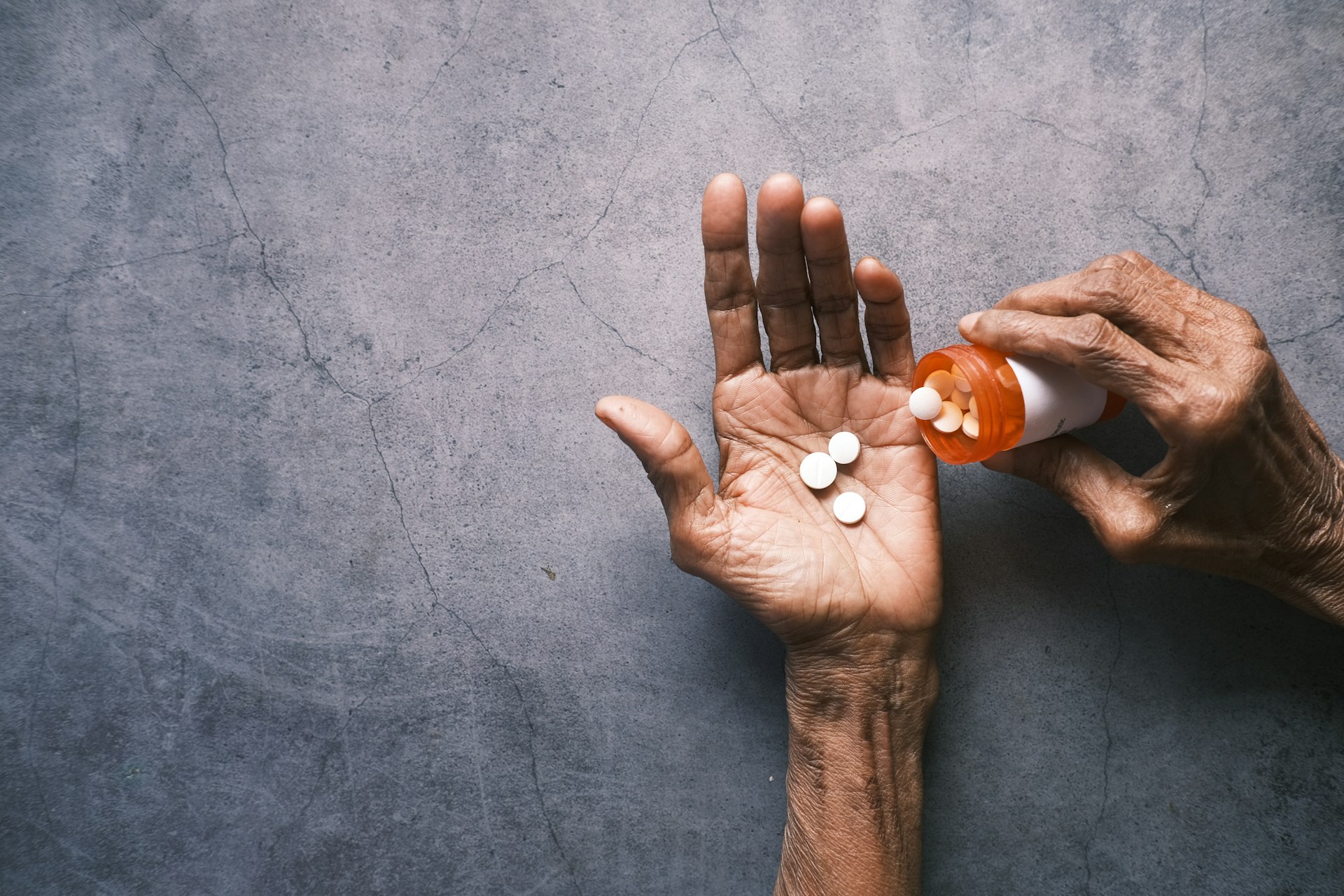
August 21 is National Fentanyl Prevention and Awareness Day. Around Nashville, the pills that carry the most risk are the ones that look exactly like something a pharmacy would hand you.
Someone finds a pill. It turns up in a coat pocket next to a laundry basket in Goodlettsville, or loose in a car console off Gallatin Pike, and it has a letter and a number pressed into the surface the same way a pharmacy tablet does. They look the imprint up on a phone. The search returns a name they recognize: oxycodone, or alprazolam, or amphetamine salts. Color matches. Shape matches. Stamp matches. And none of that tells anyone what is actually inside it.
The fentanyl reaching Davidson County mostly does not arrive announced. It arrives inside a pill somebody believed was a Percocet, a Xanax, or an Adderall, bought from a contact on a phone rather than a counter at a pharmacy. That is a different situation from heroin, it carries a different shape of risk, and it changes what a medically supervised fentanyl detox has to plan for weeks later.
Whoever is doing the reading tonight, the person taking the pills or the parent who found one and has not slept since, fear is not the useful part. Understanding how the counterfeit supply actually works is. Tennessee’s own health authorities have been unusually blunt about how these pills get made, and that bluntness is worth borrowing.
A Pill That Looks Right and Is Not
Almost everyone gets this wrong at first, including people who have been around pills for years. You cannot identify fentanyl by looking at a tablet. The National Institute on Drug Abuse states it without hedging: you cannot tell whether a drug or a pill contains fentanyl by looking at it, tasting it, or smelling it. The Tennessee Department of Mental Health and Substance Abuse Services says the same thing in the plainest possible language on its fentanyl page, noting that fake pills in the drug supply look almost the same as the real pills a pharmacy dispenses with a prescription.
The medicines being copied are the ones people already trust. NIDA describes counterfeit pills pressed to imitate prescription pain medicines, medicines for anxiety, and medicines for attention-deficit/hyperactivity disorder, and notes they are often sold through social media and internet sites. In practical terms, a Percocet, a Xanax, and an Adderall are the three most likely to be sitting in a drawer in Madison with fentanyl in them. It also means the transaction rarely happened on a corner. It happened over a phone, in a bedroom, in a house on a normal street, and looked like nothing at all from the hallway.
That changes how a family should read what they are seeing. NIDA links a rise in overdose deaths among adolescents to counterfeit medicines for anxiety and ADHD that had fentanyl mixed in, even though teenagers do not report using more illegal drugs than they used to. A 19-year-old home for the weekend in Hendersonville who takes one pill from a friend before a final has not made the same decision as a person seeking out fentanyl. The counterfeit supply erased the distance between those two decisions and never mentioned it.
Why Two Pills From the Same Bag Are Not the Same Pill
If the pills look identical, it is reasonable to assume they are identical. They are not, and the reason is almost boringly mechanical.
A pharmaceutical plant blends active ingredient into filler using equipment built to spread it evenly, so every tablet in the lot carries the same dose. Tennessee’s fentanyl page describes the counterfeit version of that process without any softening. People making illicit drugs, the state writes, “do not have the special equipment that spread out the chemicals evenly,” and so “each pill or powder is not the same.” Picture cookie dough mixed by hand in a hurry. Some cookies come out with no chips at all and one comes out with a fistful. Fentanyl lands in the batch the same uneven way.
The margin is what makes that unevenness so serious. NIDA puts a fatal amount at as little as 2 milligrams of fentanyl, roughly what a few grains of table salt would weigh, and notes the danger is highest for someone whose body is not used to powerful opioids. Which is why the story families keep telling is the same story. The person had taken pills from that source before, several times, and nothing happened. Then one pill was different. Nothing about their behavior changed. The clump did.
Tennessee publishes the death count alongside that guidance, year by year: 501 in 2017, 2,014 in 2020, a peak of 2,797 in 2022, then 2,270 in 2023 and 1,624 in 2024. The recent direction is genuinely better, and naloxone in more hands is part of the reason. That does not mean the risk went away. It means more people survived it.
What a Fentanyl Test Strip Can Tell You, and Where It Stops
Test strips get talked about like a solution. Being precise about what they actually do matters, because that precision is the part that keeps somebody alive. A fentanyl test strip is a small piece of treated paper, similar to what sits inside a pregnancy test. NIDA describes the method: crush the pill, mix a small amount with water, dip one end of the strip in, and read it after a couple of minutes.
Reading a Test Strip is Counterintuitive Enough That it is Worth Memorizing
Per the state’s guidance, one line means fentanyl was detected. Two lines, even two faint lines, mean it was not. People get that backward under stress. In March 2022 the Tennessee General Assembly passed legislation permitting individual use of equipment that detects synthetic opioids such as fentanyl, and the state health department added strips to its overdose prevention program, so carrying them here is no longer the legal gray area it once was.
What You Should Know About Test Strips
The limits are where families get a false sense of safety, and every one of them is worth knowing before you rely on a strip.
- A clean strip does not clean the pill. NIDA notes that even when a drug contains fentanyl, the small sample being tested may not have any in it. The clumping problem applies to the crumb you tested, too.
- Strips can miss fentanyl’s relatives. NIDA notes the strips may not detect other similar drugs mixed in, and some of those, like carfentanil, are stronger and more likely to cause an overdose.
- Strips say nothing about the rest of the pill. They check for one thing. A separate strip is needed to check for xylazine, and nothing on the counter tells you whether a benzodiazepine or a stimulant is in there too.
- A negative result is not a reason to skip naloxone. The state says it directly: no test strip can detect all forms of fentanyl or test all substances, and naloxone should be nearby no matter what the strip shows.
The honest summary is narrower than most people want it to be. A positive result tells you something real and worth acting on immediately. A negative result only speaks for the crumb that got tested.
Xylazine: A Sedative That Naloxone Does Not Reverse
There is a second ingredient moving through the supply now, and it changes what an overdose looks like when it happens in front of you. Xylazine, known on the street as “tranq,” is a tranquilizer and central nervous system depressant, meaning a drug that slows the body’s core functions down. The Food and Drug Administration approved it for veterinary medicine, for use in animals, and never approved it for people. It slows breathing, heart rate, and blood pressure, and at some doses that slowing becomes life threatening on its own.
Xylazine is Not an Opioid, So Naloxone Does Not Reverse It
Naloxone, sold as Narcan, works by knocking opioids off the receptors they attach to, and xylazine is not sitting on those receptors at all. NIDA is equally clear about the consequence, and it runs opposite to what people assume: give the naloxone anyway. Xylazine overdoses almost always involve opioids as well, most often fentanyl, so the reversal medication still has real work to do.
So the emergency response does not change. Call 911. Give naloxone. If the person is unconscious, check that they are still breathing, place them on their side with their head supported, give rescue breaths if you know how, and stay with them until responders arrive. What does change is your expectation. Someone can receive naloxone, have the opioid part reversed, and remain heavily sedated. That is the sedative still working, not a failed dose.
NIDA notes that standard-strength naloxone still reverses fentanyl in most people who overdose on it, though some may need a second dose. The scale here is not small either: between 2019 and 2022, xylazine detection more than doubled in 30 states based on drug-seizure data. And if the emergency in front of you is not an overdose but a person in danger of hurting themselves, 988 reaches the Suicide and Crisis Lifeline by call or text.
How To Get Naloxone
Naloxone is genuinely easy to get in Middle Tennessee, and cost is not the obstacle people assume. Tennessee’s Regional Overdose Prevention Specialists distribute naloxone and provide free training in how to use it, with 20 specialists covering 13 regional divisions statewide and one assigned to Davidson County. Between October 2017 and July 2025 that program distributed more than 1,000,000 units of naloxone, trained more than 600,000 people, and documented at least 114,000 lives saved. Pharmacies also sell it without a prescription, and many plans, TennCare included, cover it at minimal cost. Keeping two doses in a kitchen drawer in Hendersonville is not an admission that things have gone badly. It is the same logic as a smoke detector.
Why Coming Off Fentanyl Surprises People Who Have Detoxed Before
This is the part that people who have already been through a withdrawal find hardest to believe, and it is far better to know before it happens than after. If someone came off oxycodone or heroin a few years ago and remembers roughly what that week cost them, fentanyl does not follow that memory. Plenty of people arrive here braced for the detox they remember and meet something that behaves differently.
The Reason Sits in How Fentanyl Moves Through the Body
A 2023 review in the Journal of Addiction Medicine describes fentanyl as highly lipophilic, meaning it dissolves easily into fat, so it rushes into well-supplied tissue like the brain and then redistributes outward into muscle and body fat. The same review documents a long terminal elimination and a secondary peaking phenomenon, sometimes called fentanyl rebound, in which drug levels climb again after everyone expected them to keep falling. In people using illicitly made fentanyl often and in large amounts, the authors write, that build-up in the body’s outer tissues may be producing prolonged exposure.
Translated out of the pharmacology: fentanyl tucks itself into fat and muscle, then seeps back out for longer than anyone plans for. The start of withdrawal can be delayed, so a person may feel almost fine and assume they got away with it. The acute stretch can run past the three-to-five-day window people associate with short-acting opioids, which is exactly the point where someone quitting at home decides it will never end and uses again. And the long tail, the broken sleep and flat mood and cravings that surface out of nowhere, is post-acute withdrawal, and it can run for weeks after the worst days are over. NIDA also reports early research suggesting withdrawal may be more intense when xylazine is in the mix alongside fentanyl, though that work is still young.
The First Dose of Buprenorphine Is a Timing Decision
Buprenorphine, the medication inside Suboxone, binds tightly to the same receptors fentanyl uses and pushes the fentanyl off them. Given too early, while a meaningful amount of fentanyl is still stored in the body, that shove can trigger precipitated withdrawal, which is withdrawal that arrives all at once and severely rather than building gradually over hours.
The numbers are worth knowing. In a study of 1,679 people seeking treatment across 49 addiction treatment centers, published in the Journal of Addiction Medicine, roughly one in five of those who took buprenorphine within 24 hours of their last fentanyl use reported severe withdrawal. The same pattern did not show up among people who took methadone, which suggests the effect is specific to buprenorphine. The authors were direct that better induction strategies are urgently needed.
Buprenorphine remains one of the most effective treatments available for opioid use disorder, and nothing above should be read as a reason to avoid it. What the finding actually points at is who should be watching the clock. Timing that first dose is a clinical judgment made against a person’s real symptoms and real history, and getting it wrong alone in a bedroom in Old Hickory is a very different night than getting it wrong on a unit with a nurse in the hall and orders already written.
How Music City Detox Handles a Fentanyl Detox
Music City Detox sits at 370 Cumberland Way in Madison, a few minutes off Gallatin Pike and close to the I-65 and Briley Parkway interchanges. That location matters for a practical reason: family in Goodlettsville, Old Hickory, or Hendersonville can make the drive for a family session without giving up a whole day. Detox happens on an inpatient unit with around-the-clock nursing, which means the hours when withdrawal peaks, usually the ones in the middle of the night, are covered by somebody whose job is to notice.
Medication-Assisted Treatment in Tennessee
For opioid use disorder, our medication-assisted treatment options include Suboxone, Sublocade, Vivitrol, and Naltrexone, selected and timed for the individual under physician-led medical oversight rather than run off a template. Alongside those, comfort medications take on the specific miseries people actually report: nausea, cramping, restless legs, and the sleeplessness that makes every other symptom louder. The fentanyl withdrawal timeline runs longer day by day than most people expect.
A counterfeit pill history changes the assessment in ways that are easy to miss. Someone who believed they were taking Xanax for a year may have a real benzodiazepine dependence layered underneath the opioid one, and benzodiazepine withdrawal can cause seizures, which turns a careful taper into a safety measure rather than a comfort measure. Someone who believed they were taking Adderall may be facing stimulant withdrawal at the same time. Assuming one substance when three are present is one of the reliable ways a detox goes badly.
Dual Diagnosis Treatment in Tennessee
Very often something else has been running underneath all of it. Depression, anxiety, and unresolved trauma sit beneath a great many opioid use disorders, which is why dual diagnosis care belongs in the plan from the start instead of in a referral for later. Once the body is steady, most people move into residential treatment, where the slower work begins. On cost, we are in network with Aetna, Anthem, Blue Cross Blue Shield, Cigna, and Tricare East, and how benefits get reviewed depends on the cost of detox and your specific plan. Our team will tell you what your specific plan actually covers before you agree to anything. The wider picture of fentanyl across Davidson County shows how far past Madison this reaches.
Start a Safe Fentanyl Detox in Madison
If there is a pill in the house and nobody knows what is in it, that uncertainty tends to fill the hours that should be for sleeping. It is also a good reason to make the next move a medical one instead of a guess. The team at Music City Detox admissions will walk through what an arrival looks like, review your coverage with you, and answer the questions nobody asks first: work, custody, and how long any of this takes.
Parents and partners reach us before patients do more often than not, and that call is welcome; nobody has to have talked anyone into anything before picking up the phone. If tonight is not the night, that is a fair call. SAMHSA’s national helpline, 1-800-662-HELP (4357), is free and confidential if you want an outside opinion first. The offer holds. Whenever you decide, we will meet you without a speech about what should have happened sooner.
FAQs About Detecting Fake Pills and Fentanyl Prevention
Not by looking at it. The National Institute on Drug Abuse states that you cannot tell whether a pill contains fentanyl by looking at it, tasting it, or smelling it, and Tennessee’s health department notes that counterfeit pills look almost identical to the real ones a pharmacy dispenses. The only check available is a fentanyl test strip: crush a small amount, mix it with water, dip the strip, and read it. One line means fentanyl was detected; two lines, even faint ones, mean it was not. A negative result only speaks for the crumb you tested, because fentanyl is mixed unevenly through a batch, so keep naloxone nearby regardless.
Naloxone reverses the opioid part of an overdose and nothing else. Xylazine is a veterinary tranquilizer rather than an opioid, so naloxone does not reverse it. Give naloxone anyway, because xylazine is almost always mixed with fentanyl and the reversal medication still has work to do. Call 911, give the dose, check that the person is breathing, place them on their side with their head supported, give rescue breaths if you know how, and stay until responders arrive. If they remain heavily sedated after naloxone, that is the sedative still working, not a failed dose.
Often, and for a specific reason. Fentanyl dissolves readily into fat and stores in muscle and body fat, and a 2023 review in the Journal of Addiction Medicine documents a long elimination with a secondary rebound in drug levels, so withdrawal can start later and run longer than people expect from oxycodone or heroin. Starting buprenorphine too soon after fentanyl can also trigger sudden, severe withdrawal, which is why the timing of that first dose belongs to a clinical team. Medically supervised detox for Middle Tennessee residents is available at Music City Detox in Madison, and naloxone and free overdose-response training are available through Tennessee’s Regional Overdose Prevention Specialists in Davidson County.
Sources
- National Institute on Drug Abuse. (2025). Fentanyl. Retrieved from: https://nida.nih.gov/research-topics/fentanyl. Accessed on August 17, 2026.
- National Institute on Drug Abuse. (2024). Xylazine. Retrieved from: https://nida.nih.gov/research-topics/xylazine. Accessed on August 17, 2026.
- Tennessee Department of Mental Health and Substance Abuse Services. (n.d.). Fentanyl information and resources. Retrieved from: https://www.tn.gov/behavioral-health/substance-abuse-services/prevention/fentanyl.html. Accessed on August 17, 2026.
- Tennessee Department of Mental Health and Substance Abuse Services. (n.d.). Regional Overdose Prevention Specialists. Retrieved from: https://www.tn.gov/behavioral-health/substance-abuse-services/prevention/rops.html. Accessed on August 17, 2026.
- Bird, H. E., Huhn, A. S., & Dunn, K. E. (2023). Fentanyl absorption, distribution, metabolism, and excretion: Narrative review and clinical significance related to illicitly manufactured fentanyl. Journal of Addiction Medicine, 17(5), 503-508. Retrieved from: https://pmc.ncbi.nlm.nih.gov/articles/PMC10593981/. Accessed on August 17, 2026.
- Varshneya, N. B., Thakrar, A. P., Hobelmann, J. G., Dunn, K. E., & Huhn, A. S. (2022). Evidence of buprenorphine-precipitated withdrawal in persons who use fentanyl. Journal of Addiction Medicine, 16(4), e265-e268. Retrieved from: https://pmc.ncbi.nlm.nih.gov/articles/PMC9124721/. Accessed on August 17, 2026.
- Substance Abuse and Mental Health Services Administration. (n.d.). SAMHSA’s national helpline. Retrieved from: https://www.samhsa.gov/find-help/helplines/national-helpline. Accessed on August 17, 2026.