- Top Rehab in The State of Tennessee
- 5-Star Reviewed
- Most Major Insurance Accepted
Our beds are in Tennessee, not Alabama, and that is the honest starting point. For families in Huntsville, Decatur, the Shoals, and the counties strung along I-65, medically supervised withdrawal sits a couple of hours north of home.

Begin Rehab in Nashville
We know finding treatment is overwhelming. We’re here to guide you through the process.
Somewhere in north Alabama right now, someone is doing math in the dark. How many hours since the last drink. Whether what is left in the bottle will hold off the shaking until the store opens. Whether the tremor will be visible at work tomorrow, and to whom. Nobody picks up that arithmetic on purpose. It arrives on its own, usually years after the first drink or the first prescription.
None of that is a character problem. It is what a body does once it has been taught to expect a substance every few hours, and it is the reason stopping alone can turn medical fast. Music City Detox provides medically supervised drug detox and residential treatment for substance use disorders from our facility in Madison, Tennessee. Alabama is not on our sign and we will not pretend otherwise. What we offer Alabama residents is a specific kind of closeness. We sit at the top of Interstate 65, the same road that runs the length of your state. The trip is measured in hours. Alabama shows up regularly among the communities we serve.
The person who needs the bed and the person who would do the driving are rarely the same person. Both of you are welcome to ask questions here, and neither of you has to have the whole plan figured out first.
Nobody leaves their own state casually. If you have gotten as far as reading about a facility in Tennessee, something closer to home has usually already been tried, or called, or waited on. Running out of nearby options can feel like overreacting. It is not.
Alabama has real treatment infrastructure, and for many people a licensed program close to home is the right answer. Medically supervised withdrawal is narrower. It means a bed, a nurse, and a physician-led plan for the days when a body running on alcohol, opioids, or benzodiazepines suddenly has none. That level of care clusters in a few metro areas, and a wait for a bed does not always land in the week a person is actually willing to go.
There is also a clinical argument for putting road between a person and the place where the using happens. The kitchen, the truck, the parking lot behind the job, the three numbers in the phone: the brain has tied all of it to relief, and those cues keep firing hardest in the first days without a substance. In a town where the pharmacist went to school with your mother, distance buys one more thing, which is the freedom to get well without an audience.
Honest distances, measured the way you would actually drive them:
The last leg is simple. I-65 crosses the state line at Ardmore, runs past Pulaski, Columbia, and Franklin, and carries you around Nashville. Briley Parkway east drops you onto Gallatin Pike near Rivergate, minutes from the Cumberland River and from us.
If part of you has been wondering whether your family is an unusual case, Alabama’s own reporting answers that plainly. Start with how many Alabamians first met an opioid, because it explains more than any other single fact. The Alabama Department of Mental Health reports that in 2012 the state led the nation in opioid prescribing at 143.8 prescriptions per 100 people. Prescribing has since fallen by half, to 71.4 per 100 residents in 2023, which is real progress. Even so, the state’s dispensing rate remains about twice the national average and second only to Arkansas. Plenty of people now living with an opioid dependence in Alabama never went looking for one. They got a legitimate bottle after a back surgery or a wreck, and the body did what bodies do with a daily opioid. That is why prescription opioid detox is one of the most common reasons anyone walks through a detox door.
The treatment side is counted too. The state’s 2025 drug threat assessment reports that 4,017 Alabamians entered treatment for methamphetamine in 2023 and 1,665 for fentanyl, with fentanyl admissions up 469 in a single year. Prescription medications accounted for another 1,406, heroin 1,218, and cocaine 1,026. The counties with the most admissions for addiction of any kind, alcohol included, were Jefferson at 2,796, Madison at 1,737, and Mobile at 1,706. The five largest age groups were people aged 32 through 36. This is not mainly happening to teenagers. It is happening to people with mortgages and shifts to cover.
Two figures from that reporting sit side by side. Fentanyl overdose deaths in Alabama reached 1,126 statewide in 2023, so the cost of waiting is not abstract. Then, for the first time since 2017, the state recorded a notable drop in substance-related overdose deaths, roughly 30 percent from April 2024 to April 2025 in provisional federal data. Naloxone in more hands and more people reaching treatment are part of why. A better direction is not the same as safety, but it does mean the last few years bought something.
The most useful thing to know before a first call is that withdrawals are not interchangeable. Some are miserable. A few can kill a person. Which one you are dealing with decides whether the next few days belong at home or on a unit.
If that list made your stomach drop because it describes someone in your house, the reaction is accurate rather than dramatic. It is also why this gets treated as medical care and not willpower coaching.
Most people picture the worst version of detox, because that is the version movies show. What happens here is closer to a hospital stay with better food and a quieter hallway.
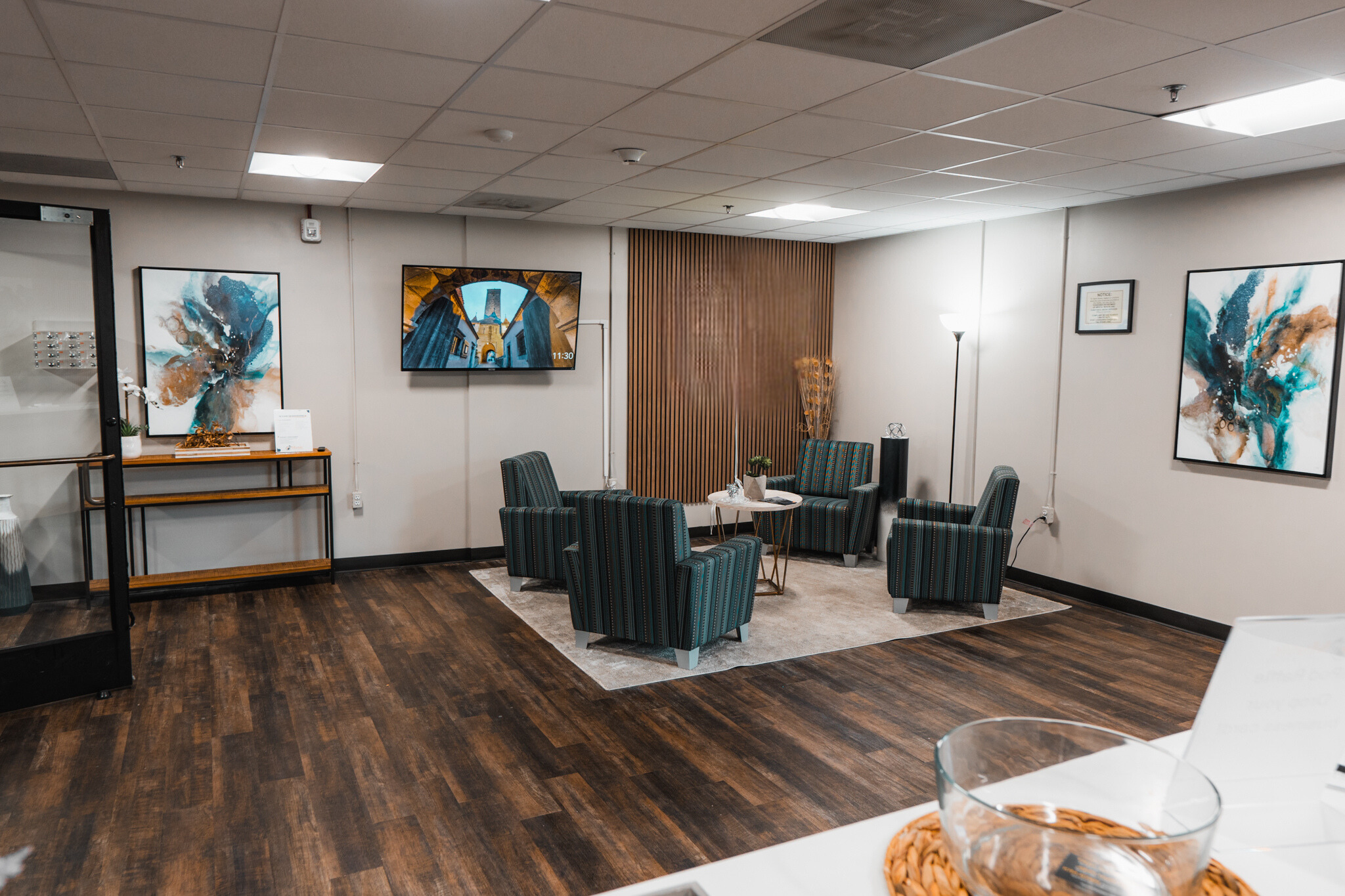
Our facility is at 370 Cumberland Way in Madison, Tennessee, minutes off Gallatin Pike near Rivergate and an easy reach from Briley Parkway and I-65. Care opens with a medical intake: vitals, an honest accounting of the substances and amounts involved, and a check for the conditions that turn a withdrawal dangerous. Nurses stay on the floor through the night, because alcohol and benzodiazepine withdrawal usually turn between midnight and dawn. Clinicians match the intensity of care to what a person needs using the framework published by the American Society of Addiction Medicine.
Comfort medications handle the miseries people actually report: nausea, body aches, restless legs, sweating, and the sleeplessness that makes everything else louder. For opioid use disorder, the medications SAMHSA treats as standard care are available here. Our medication-assisted treatment covers Suboxone, Sublocade, Vivitrol, and naltrexone, and which one fits, at what point, is a decision our medical team makes for that person rather than pulling it off a shelf.
Therapy starts while the body is still settling: individual sessions with a master’s-level therapist, cognitive behavioral and dialectical behavior therapy, trauma-informed and somatic work, art and music therapy, with Alpha-Stim and a biosound room for nervous systems that need help downshifting. Genetic testing helps guide medication choices. AA and NA meetings run on site, SMART Recovery is part of the week with a virtual option, and a private chef handles the food. Phone contact is set at twice a week, which sounds strict until you have watched how much of an early week gets undone by one call home.
Detox clears a substance from the body. It does not touch the reasons the substance was there, and no honest program will pretend it does. That gap is where people come apart, usually within days of a discharge that felt like a finish line.
So detox here runs straight into residential treatment on the same campus with the same team. Depression, anxiety, grief, and untreated trauma sit underneath a large share of substance use disorders, so co-occurring conditions get treated alongside the substance instead of handed off later. Family therapy is there partly for the person in treatment and partly for the parent or spouse back in Huntsville or Hoover who has their own hard year to unpack.
Alabama is still home, though, and the plan has to work there. Our team builds aftercare around where a person is actually going: outpatient care, meetings, and prescribers near their own zip code, arranged before the drive south rather than after. It also helps to know ahead of time that the flat, foggy, hard-to-sleep stretch after the acute days has a name, post-acute withdrawal, and that it fades. People who expect it are far less likely to read it as failure. SAMHSA’s FindTreatment.gov lists licensed Alabama programs by city for the care that continues at home.
At Music City Detox, our team of addiction experts in Nashville specialize in dual diagnosis treatment and premier detox services. We’re committed to helping each client find their own path to recovery.
For most families this is the question that quietly decides everything, so it deserves a straight answer instead of a marketing one. Music City Detox is in network with Aetna, Anthem, Blue Cross Blue Shield, Cigna, and Tricare East Select and Prime. Blue Cross plans are organized state by state, so whether an Alabama Blue plan pays at a Tennessee facility comes down to that plan’s rules for out-of-state care. The same goes for many employer plans.
The only place that answer lives is in your policy, and it should be settled before anyone packs a bag. Our admissions staff runs the check with the carrier and reads the result back to you, including the parts that are not covered. How that review works, and what private pay looks like if coverage falls short, comes down to the cost of detox against your specific plan.
Alabama’s military families sit in the Tricare East region, so our in-network status with Tricare East Select and Prime is worth knowing for households tied to Redstone Arsenal, Maxwell Air Force Base, or Fort Novosel. Referral rules and coverage still vary by plan, so that conversation starts the same way every other one does, with someone reading your benefits out loud to you.
It usually starts sideways. Somebody calls to ask what this costs, or how long it takes, or whether a person can keep a job while they do it. About ten minutes in, the real question comes out: is it this bad, and is it too late? Usually the answer to both is no.
Through the Music City Detox admissions team you can get benefits verified, hear what an arrival involves, and get a straight answer about whether this is the right level of care or whether something closer to Birmingham or Mobile fits better.
Nobody has to be the patient to be the one who calls, and asking sets nothing in motion. If today is not the day, none of this expires; come back to it when it is. If someone is in immediate danger, call 911, and 988 reaches the Suicide and Crisis Lifeline by call or text from anywhere in Alabama.






No. Our facility sits at 370 Cumberland Way in Madison, Tennessee, on the north side of Nashville. The Alabama residents we treat drive or fly in, most often from Huntsville, Decatur, Athens, the Shoals, and the Birmingham area. Intake and discharge planning are both built around the fact that home is in another state, including how continuing care gets arranged before anyone drives back.
Often, though it depends on the plan rather than the state line. Music City Detox is in network with Aetna, Anthem, Blue Cross Blue Shield, Cigna, and Tricare East Select and Prime. Blue Cross plans are organized state by state, so whether an Alabama Blue plan pays at a Tennessee facility comes down to that plan’s rules for out-of-state care. Our admissions team verifies benefits with the carrier and tells you what is covered, what is not, and what any balance would look like before you commit to anything.
From Huntsville and the Tennessee Valley it is roughly two hours straight up I-65, about three from Birmingham, and four or more from Montgomery. South Alabama families often fly into Nashville International Airport instead, about 20 minutes from our door. Family involvement is part of the clinical plan: family therapy is offered during the stay, and phone contact is scheduled twice a week. Admissions can walk through visiting and session logistics based on where you are driving from.